Alpha Controls - BMS Install Specialists
ResourcesAboutProjectsContact
info@alphacontrols.io01474 552200
Get a Quote
Alpha Controls

Professional Building Energy Management Systems installation and electrical engineering services across the UK.

Quick Links

  • About Us
  • Projects
  • Resources
  • Blog
  • Contact
  • Careers

Services

  • BMS Installation
  • Controls Systems
  • Electrical Services
  • Maintenance

Contact

  • 01700 800121

    Emergency FM & BMS Advice

  • 01474 552200
  • info@alphacontrols.io
  • Gravesend, Kent
    United Kingdom

© 2026 Alpha Controls LDN. All rights reserved.

SafeContractor ApprovedBCIA MemberConstructionLine Gold
When to Use End-of-Line Resistors in BMS Systems (and Why VAV Controllers Use Resistors)
Back to Blog
BMS Technical

When to Use End-of-Line Resistors in BMS Systems (and Why VAV Controllers Use Resistors)

30 January 2025
12
By Alpha Controls Team

End-of-line (EOL) resistors play a critical role in ensuring reliable communication and fault detection within Building Management Systems (BMS). Understanding when and why to use EOL resistors can prevent communication failures, improve system diagnostics, and extend equipment lifespan.

What Are End-of-Line Resistors?

End-of-line resistors are passive electrical components placed at the termination point of a communication line or supervised circuit. They serve two primary functions:

  • Signal Termination: In communication networks like BACnet MS/TP or RS-485, EOL resistors prevent signal reflections that can corrupt data transmission.
  • Circuit Supervision: In security and fire alarm systems, EOL resistors allow the monitoring panel to detect faults such as open circuits or short circuits.

When Do BMS Systems Use End-of-Line Resistors?

1. BACnet MS/TP Networks (RS-485)

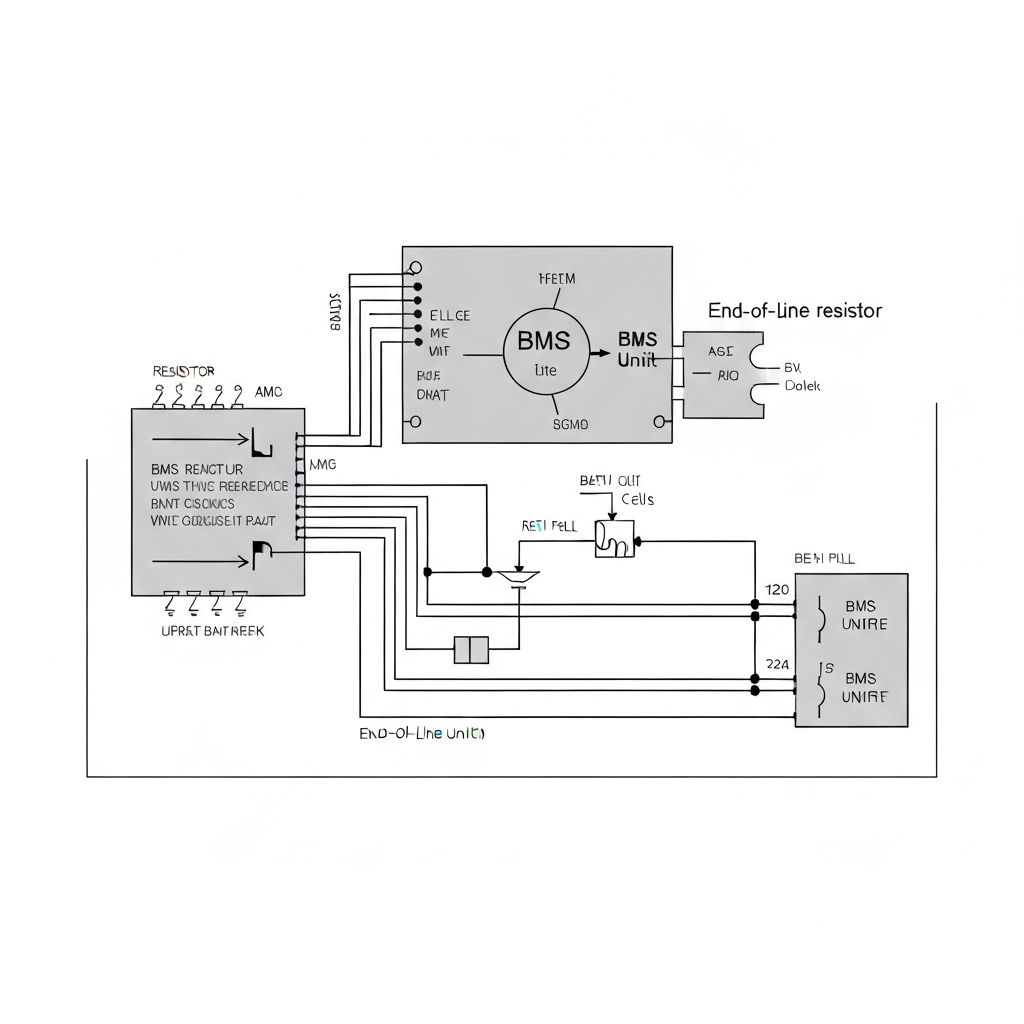
BACnet MS/TP is a widely used protocol for connecting BMS controllers and field devices. It operates over twisted-pair RS-485 cabling and requires proper termination at both ends of the network trunk:

  • Standard Termination Value: 120Ω resistor
  • Installation Location: First and last devices on the trunk cable
  • Why It's Needed: Prevents signal reflections that can cause communication errors, especially in longer cable runs (>50 meters).

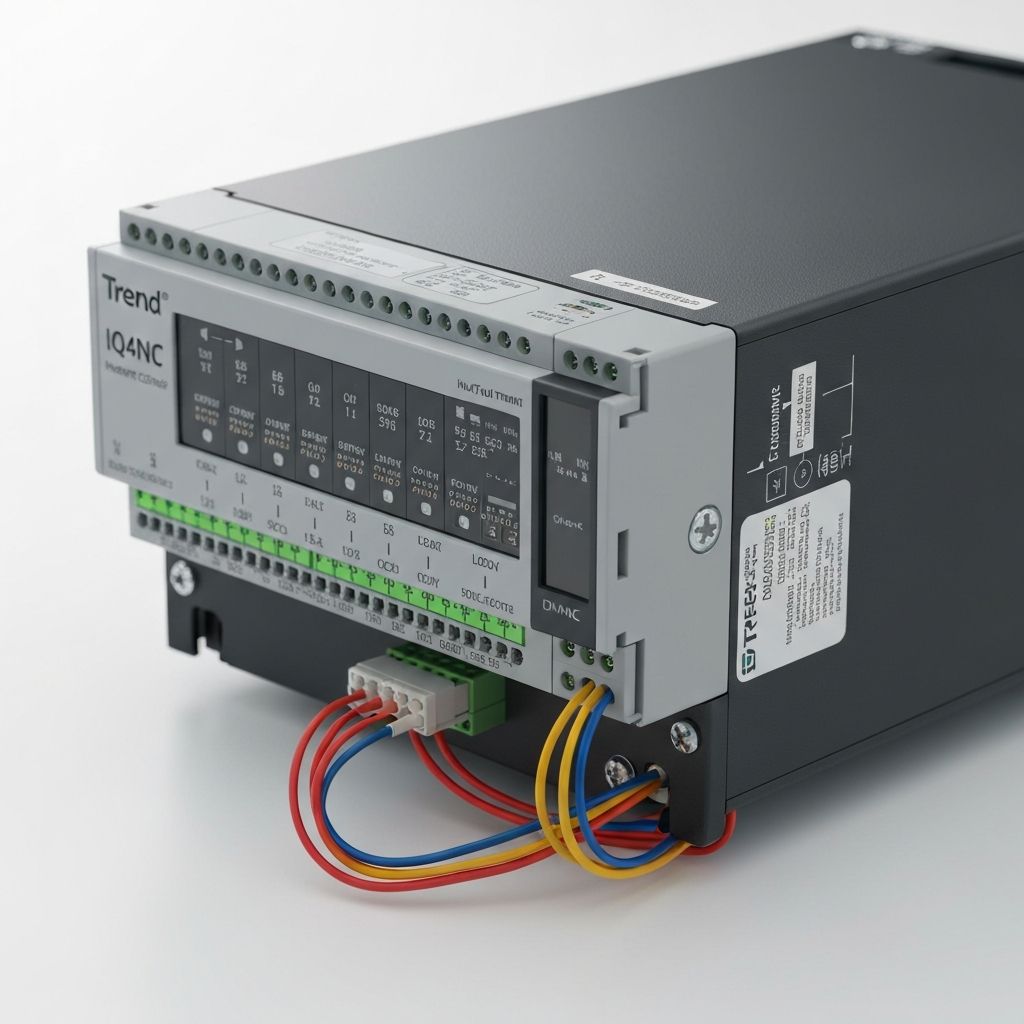
Example: In a building with a BACnet MS/TP trunk connecting 15 VAV controllers across three floors, a 120Ω termination resistor is installed at the first controller (near the IQ412 controller) and at the last controller on the opposite end of the network.

2. VAV Controllers with Damper Position Feedback

Many Variable Air Volume (VAV) controllers use analog inputs (0-10V or 4-20mA) to monitor damper position. While not strictly "end-of-line," these systems may use termination resistors or pull-up/pull-down resistors to ensure accurate signal reading:

  • Open Damper Detection: A resistor (typically 10kΩ) across the analog input allows the controller to detect if the feedback cable is disconnected.
  • Noise Reduction: Termination resistors can reduce electrical noise on long analog signal cables.

3. Supervised Inputs (Alarms & Fire Systems)

Security and fire alarm panels integrated with BMS often use supervised inputs with EOL resistors to continuously monitor the integrity of connected sensors:

  • Normal State: The control panel measures a specific resistance value (e.g., 4.7kΩ or 10kΩ) at the end of the circuit.
  • Alarm State: If a sensor activates (short circuit), resistance drops to near zero.
  • Fault State: If the wire is cut (open circuit), resistance becomes infinite.

This allows the BMS to distinguish between an actual alarm, a wiring fault, and normal operation.

When Are End-of-Line Resistors NOT Needed?

  • BACnet/IP Networks: BACnet over Ethernet (BACnet/IP) does not require EOL resistors because Ethernet switches handle signal integrity.
  • Short RS-485 Networks: In very short MS/TP networks (<10 meters), termination may not be critical, though it's still best practice to include it.
  • Star-Topology Networks: If devices are connected in a star pattern (e.g., each device has its own cable run back to a central hub), termination is not required.

Practical Installation Tips

  1. Use the Correct Resistance Value: Always check the manufacturer's specification—most RS-485 networks use 120Ω, but some may vary.
  2. Install at Both Ends: For trunk networks, install termination at the first and last device only. Do not terminate stub branches.
  3. Use Polarised Termination When Required: Some systems use bias resistors (pull-up and pull-down) in addition to the termination resistor to ensure idle state stability.
  4. Document Your Terminations: Label terminated devices and record their locations in as-built drawings.

Troubleshooting EOL Resistor Issues

Symptom Possible Cause Solution
Intermittent BACnet communication Missing or incorrect termination resistor Install 120Ω resistor at both ends of MS/TP trunk
VAV damper position reads zero Open circuit in feedback wiring Check wiring continuity; install pull-up resistor if needed
Fire panel shows fault condition EOL resistor disconnected or wrong value Verify EOL resistor value matches panel specification

Conclusion

End-of-line resistors are simple but essential components in BMS, fire alarm, and communication systems. By understanding where and why they're used—whether for BACnet MS/TP termination, VAV controller feedback, or supervised alarm circuits—you can ensure reliable system operation and easier troubleshooting.

If you're upgrading a BMS or integrating legacy VAV controllers, proper termination is a small detail that makes a big difference.

Need help with BMS wiring or VAV controller integration? Contact Alpha Controls for expert guidance.

Recommended Articles

CTs vs CSs in BMS Systems: Current Transformers vs Current Switches
BMS Technical

CTs vs CSs in BMS Systems: Current Transformers vs Current Switches

Understand the difference between current transformers and current switches in BMS systems, including use cases, layouts, and best practice for specification.

10
29 Jan 2026
Why Modern Buildings Are Sealed and Why AHUs Are Essential for Fresh Air
BMS Technical

Why Modern Buildings Are Sealed and Why AHUs Are Essential for Fresh Air

Discover why modern high-rise commercial buildings have sealed facades with non-opening windows, and why Air Handling Units (AHUs) are now the only source of fresh air. Learn about energy efficiency, safety regulations, air quality compliance, and the critical relationship between AHUs and FCUs.

14
8 Feb 2025
How to Integrate Old Belimo VAV Actuators with Trend IQ412 Controllers: A Complete Guide by Alpha Controls
BMS Technical

How to Integrate Old Belimo VAV Actuators with Trend IQ412 Controllers: A Complete Guide by Alpha Controls

Learn how to integrate legacy Belimo VAV actuators with modern Trend IQ412 controllers and wire TROX VAV controllers using BACnet MS/TP. Complete wiring guide for BMS upgrades.

15
7 Feb 2025
Inputs vs Outputs on BMS Devices: Understanding I/O on Trend IQ4NC & IQ ECO 412 Controllers
BMS Technical

Inputs vs Outputs on BMS Devices: Understanding I/O on Trend IQ4NC & IQ ECO 412 Controllers

A comprehensive guide to understanding inputs and outputs on Building Management System devices, with detailed focus on Trend IQ4NC and IQ ECO 412 controllers. Learn the difference between digital and analog I/O, sensor wiring, and troubleshooting common issues.

18
2 Feb 2025
What is BACnet? A Practical Guide to the Open-Protocol Standard for BMS Networks
BMS Technical

What is BACnet? A Practical Guide to the Open-Protocol Standard for BMS Networks

Learn what BACnet is, how it works, and why it's the leading open-protocol standard for building management systems. A practical guide covering BACnet/IP, MS/TP, implementation, and real-world applications.

11
30 Jan 2025
How to Wire BMS Run, Fault & Hand-Off-Auto Lighting / Switch Circuits
BMS Technical

How to Wire BMS Run, Fault & Hand-Off-Auto Lighting / Switch Circuits

Learn how to wire BMS run, fault and hand-off-auto circuits for AHUs, FCUs and VAVs, including relays, breakers and Trend controllers. A practical guide covering control panel wiring, relay logic, and best practices.

14
15 Jan 2025

Need Expert Advice?

Our team of building automation specialists is ready to help you optimise your building's performance and efficiency.

Get in Touch