Alpha Controls - BMS Install Specialists
ResourcesAboutProjectsContact
info@alphacontrols.io01474 552200
Get a Quote
Alpha Controls

Professional Building Energy Management Systems installation and electrical engineering services across the UK.

Quick Links

  • About Us
  • Projects
  • Resources
  • Blog
  • Contact
  • Careers

Services

  • BMS Installation
  • Controls Systems
  • Electrical Services
  • Maintenance

Contact

  • 01700 800121

    Emergency FM & BMS Advice

  • 01474 552200
  • info@alphacontrols.io
  • Gravesend, Kent
    United Kingdom

© 2026 Alpha Controls LDN. All rights reserved.

SafeContractor ApprovedBCIA MemberConstructionLine Gold
Inputs vs Outputs on BMS Devices: Understanding I/O on Trend IQ4NC & IQ ECO 412 Controllers
Back to Blog
BMS Technical

Inputs vs Outputs on BMS Devices: Understanding I/O on Trend IQ4NC & IQ ECO 412 Controllers

2 February 2025
18
By Alpha Controls Team

What Are Inputs and Outputs on a BMS Controller?

Inputs are connections that allow the BMS controller to read information from sensors, switches, or other devices.

Outputs are connections that allow the controller to control equipment such as actuators, pumps, fans, and valves.

Think of it this way:

  • Inputs = Sensing (the controller receives data)
  • Outputs = Controlling (the controller sends commands)
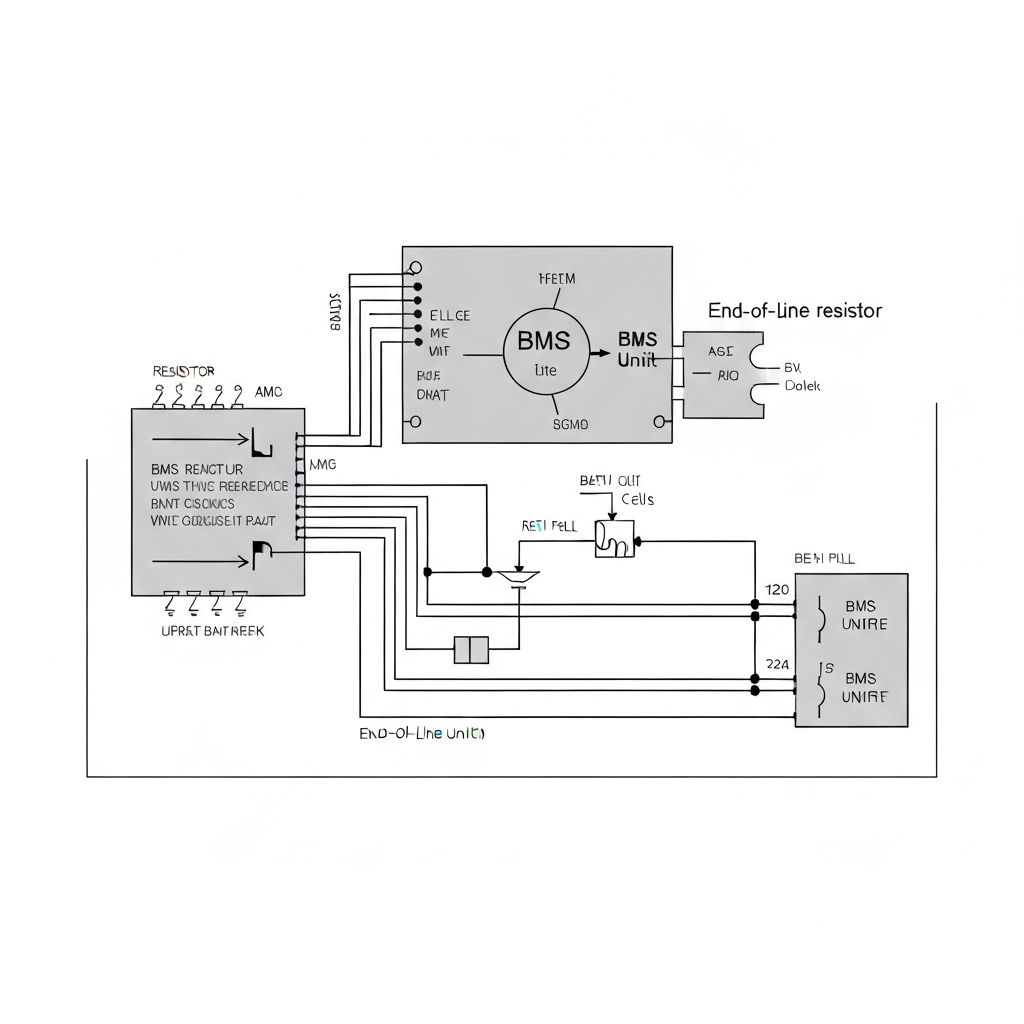
BMS input and output data flow diagram

Types of Inputs on Trend IQ4NC & IQ ECO 412

1. Digital Inputs (DI)

Digital inputs read ON/OFF states (binary signals). Common uses:

  • Switch status (pump running / stopped)
  • Alarm contacts (high pressure / normal)
  • Occupancy sensors (occupied / vacant)
  • Door switches (open / closed)

Example: A pressure switch connected to a digital input will show:

  • DI1 = ON when pressure is high (switch closed)
  • DI1 = OFF when pressure is normal (switch open)
Digital input wiring diagram showing switch connection

2. Analog Inputs (AI)

Analog inputs read variable values (0–10V, 4–20mA, PT1000, NTC). Common uses:

  • Temperature sensors (0–50°C)
  • Pressure transducers (0–10 bar)
  • CO₂ sensors (400–2000 ppm)
  • Humidity sensors (0–100% RH)
  • Flow meters (0–5 m³/s)

Example: A PT1000 temperature sensor connected to AI1 might read:

  • AI1 = 22.5°C (room temperature)
Analog input wiring diagram showing temperature sensor connection

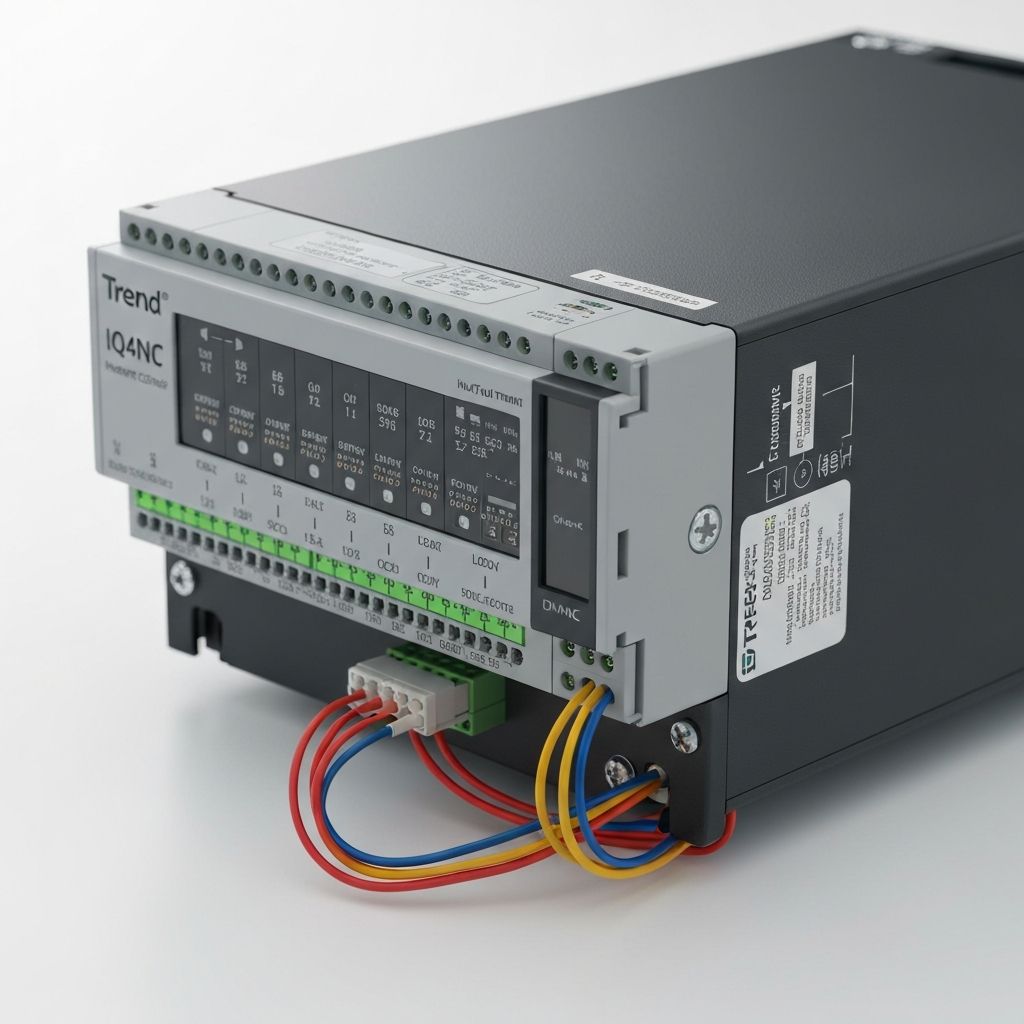
Trend IQ4NC Input Types

Input Type Quantity Signal Types Supported
Digital Inputs 8 Volt-free contacts, 0–24V
Universal Inputs 8 0–10V, PT1000, NTC10K, 4–20mA

Trend IQ ECO 412 Input Types

Input Type Quantity Signal Types Supported
Digital Inputs 4 Volt-free contacts, 0–24V
Universal Inputs 6 0–10V, PT1000, NTC10K

Types of Outputs on Trend IQ4NC & IQ ECO 412

1. Digital Outputs (DO)

Digital outputs provide ON/OFF control (relay or solid-state). Common uses:

  • Starting/stopping pumps and fans
  • Enabling/disabling heating or cooling
  • Opening/closing on-off valves
  • Triggering alarms or indicator lights

Example: A digital output controlling a pump contactor:

  • DO1 = ON → Pump runs
  • DO1 = OFF → Pump stops
Digital output wiring diagram showing pump contactor connection

2. Analog Outputs (AO)

Analog outputs provide variable control signals (0–10V, 4–20mA). Common uses:

  • Modulating valve control (0–100% open)
  • Variable speed drive (VSD) control
  • Damper actuator positioning
  • Dimming lighting systems

Example: An analog output controlling a heating valve:

  • AO1 = 0V → Valve fully closed
  • AO1 = 5V → Valve 50% open
  • AO1 = 10V → Valve fully open
Analog output wiring diagram showing valve actuator connection

Trend IQ4NC Output Types

Output Type Quantity Signal Types
Digital Outputs (Relays) 8 230VAC / 5A resistive
Analog Outputs 4 0–10V

Trend IQ ECO 412 Output Types

Output Type Quantity Signal Types
Digital Outputs (Relays) 2 230VAC / 5A resistive
Analog Outputs 2 0–10V

Practical Example: Wiring a Fan Coil Unit (FCU) to a Trend IQ ECO 412

Let's wire a typical FCU with the following components:

Inputs:

  • AI1: Room temperature sensor (PT1000)
  • DI1: Window contact (open/closed)

Outputs:

  • AO1: Heating valve actuator (0–10V)
  • AO2: Cooling valve actuator (0–10V)
  • DO1: Fan low speed (relay)
  • DO2: Fan high speed (relay)
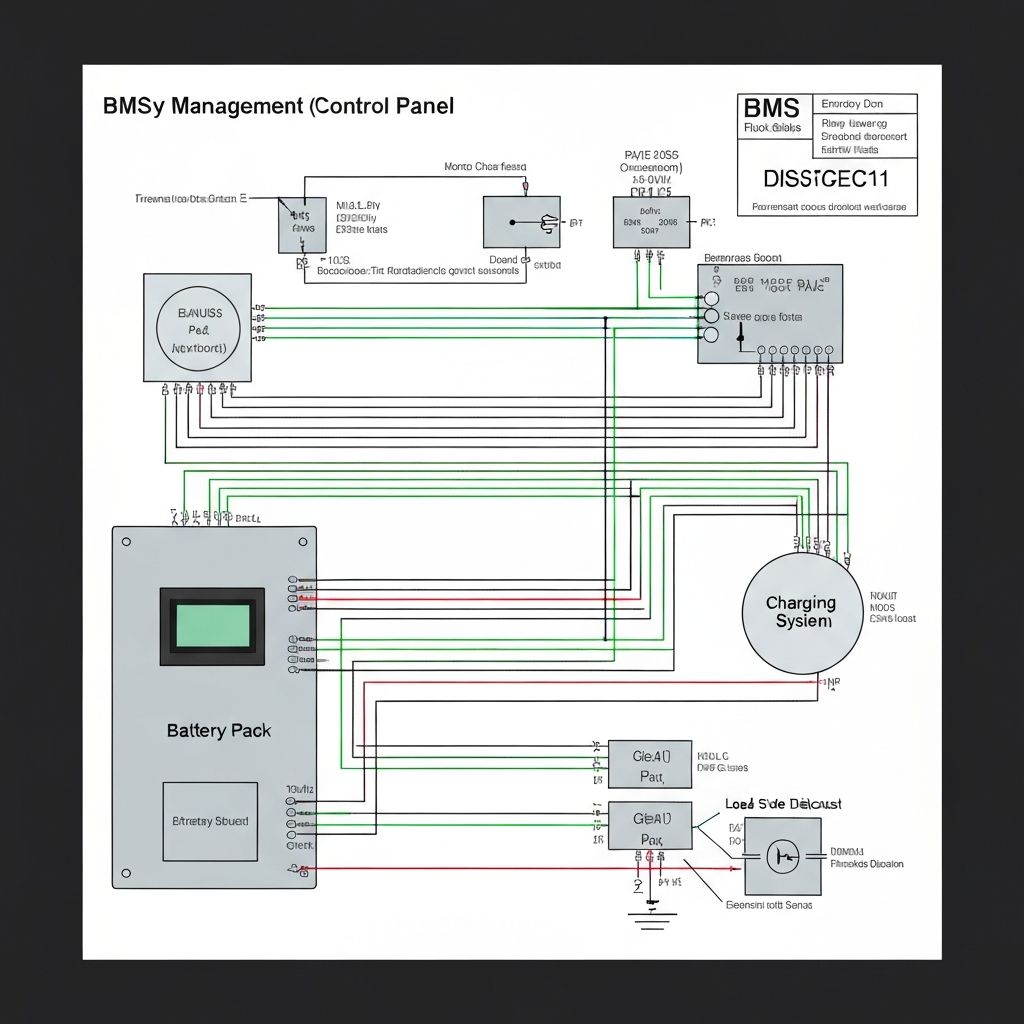
Complete FCU wiring diagram with Trend IQ ECO 412 controller

How It Works:

  1. The controller reads the room temperature via AI1.
  2. If the room is too cold, it opens the heating valve via AO1 and activates the fan via DO1.
  3. If the room is too warm, it opens the cooling valve via AO2 and switches to high fan speed via DO2.
  4. If the window contact (DI1) detects an open window, the controller can shut down the FCU to save energy.

Common Wiring Mistakes & Troubleshooting

Problem Possible Cause Solution
Temperature reads 0°C or 255°C Incorrect sensor type selected Check sensor configuration (PT1000 vs NTC10K)
Digital input always ON Wiring reversed or short circuit Verify volt-free contact wiring
Valve doesn't respond to AO signal Incorrect voltage range or broken actuator Check actuator specification (0–10V vs 2–10V)
Relay output doesn't switch Faulty relay or overload Check load rating (max 5A resistive)

Best Practices for BMS Wiring

  • Label all cables with clear identifiers (e.g., "AI1 - Room Temp")
  • Use shielded cable for analog signals to reduce interference
  • Keep signal cables separate from power cables (230VAC)
  • Test each I/O point individually during commissioning
  • Document wiring configurations in as-built drawings

Summary

Understanding inputs and outputs is fundamental to working with BMS controllers like the Trend IQ4NC and IQ ECO 412. By correctly identifying and wiring digital and analog I/O, you can build reliable, efficient control systems that monitor and manage building services effectively.

Need help with BMS wiring or controller configuration? Contact Alpha Controls for expert installation and commissioning services.

Recommended Articles

CTs vs CSs in BMS Systems: Current Transformers vs Current Switches
BMS Technical

CTs vs CSs in BMS Systems: Current Transformers vs Current Switches

Understand the difference between current transformers and current switches in BMS systems, including use cases, layouts, and best practice for specification.

10
29 Jan 2026
Why Modern Buildings Are Sealed and Why AHUs Are Essential for Fresh Air
BMS Technical

Why Modern Buildings Are Sealed and Why AHUs Are Essential for Fresh Air

Discover why modern high-rise commercial buildings have sealed facades with non-opening windows, and why Air Handling Units (AHUs) are now the only source of fresh air. Learn about energy efficiency, safety regulations, air quality compliance, and the critical relationship between AHUs and FCUs.

14
8 Feb 2025
How to Integrate Old Belimo VAV Actuators with Trend IQ412 Controllers: A Complete Guide by Alpha Controls
BMS Technical

How to Integrate Old Belimo VAV Actuators with Trend IQ412 Controllers: A Complete Guide by Alpha Controls

Learn how to integrate legacy Belimo VAV actuators with modern Trend IQ412 controllers and wire TROX VAV controllers using BACnet MS/TP. Complete wiring guide for BMS upgrades.

15
7 Feb 2025
When to Use End-of-Line Resistors in BMS Systems (and Why VAV Controllers Use Resistors)
BMS Technical

When to Use End-of-Line Resistors in BMS Systems (and Why VAV Controllers Use Resistors)

Understanding EOL resistors, signal termination, and practical BMS applications. Learn when BMS systems use end-of-line resistors, why VAV controllers need them, how supervised inputs work, and when to terminate BACnet MS/TP networks.

12
30 Jan 2025
What is BACnet? A Practical Guide to the Open-Protocol Standard for BMS Networks
BMS Technical

What is BACnet? A Practical Guide to the Open-Protocol Standard for BMS Networks

Learn what BACnet is, how it works, and why it's the leading open-protocol standard for building management systems. A practical guide covering BACnet/IP, MS/TP, implementation, and real-world applications.

11
30 Jan 2025
How to Wire BMS Run, Fault & Hand-Off-Auto Lighting / Switch Circuits
BMS Technical

How to Wire BMS Run, Fault & Hand-Off-Auto Lighting / Switch Circuits

Learn how to wire BMS run, fault and hand-off-auto circuits for AHUs, FCUs and VAVs, including relays, breakers and Trend controllers. A practical guide covering control panel wiring, relay logic, and best practices.

14
15 Jan 2025

Need Expert Advice?

Our team of building automation specialists is ready to help you optimise your building's performance and efficiency.

Get in Touch