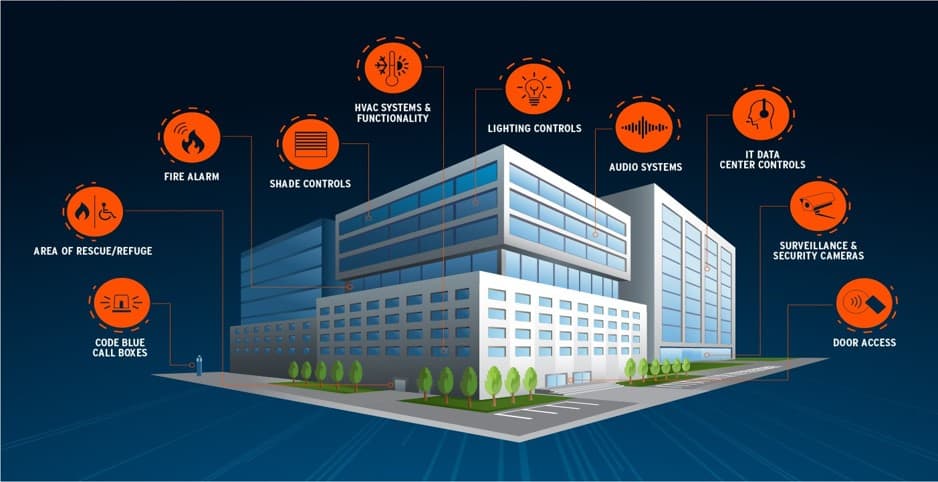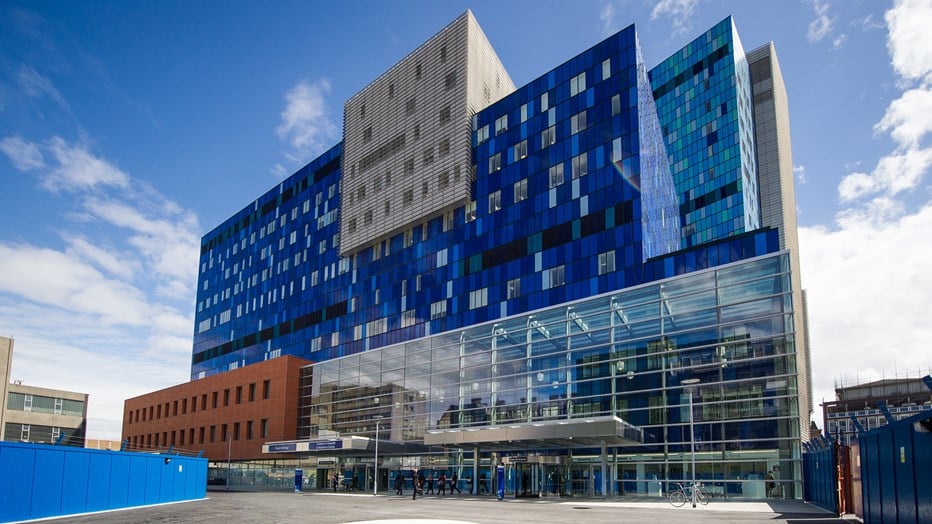
No other building type places greater demands on a Building Management System than healthcare. In a commercial office, a temporary temperature excursion is an inconvenience. In an operating theatre or isolation room, it can be a clinical risk. Healthcare BMS must achieve tighter environmental tolerances, maintain those tolerances continuously without the option of setback modes, provide automatic failover when plant fails, and generate the audit trails that regulators require. Getting it right demands specialist knowledge of both HVAC engineering and clinical environment standards.
Alpha Controls has delivered BMS installations and commissioning services for hospitals, clinics, and care homes across London and Kent. This guide explains what makes healthcare BMS different — and what to expect from a competent specialist contractor.
Health Technical Memorandum 03-01 (Specialised Ventilation for Healthcare Premises) is the governing document for ventilation in NHS and private healthcare buildings in England. It defines air change rates, pressure relationships, filtration standards, and controls requirements for every clinical area type. The BMS is the system that enforces these requirements continuously.
HTM 03-01 specifies minimum air change rates by room type. General clinical areas require 6–12 air changes per hour (ACH). Operating theatres require 15–25 ACH — with orthopaedic and laminar flow theatres requiring ultra-clean ventilation (UCV) systems delivering 300+ ACH over the operating zone. The BMS monitors airflow through each AHU serving these areas and alarms if measured flow falls below the minimum threshold.
Controlling airborne infection requires deliberate pressure relationships between zones:
The BMS maintains these differentials by modulating supply and extract fans in real time. Differential pressure sensors at each zone boundary feed continuously to the BMS controller, which adjusts fan speed to maintain the specified pascal differential — typically ±5–15 Pa. Any breach of the differential triggers an immediate alarm. Health Technical Memorandum HTM 03-01 — the NHS standard for specialised ventilation — mandates these specific pressure differentials for clinical spaces: positive pressure in immunocompromised patient rooms to prevent pathogen ingress, and negative pressure in isolation rooms for infectious patients.
HTM 03-01 prohibits air recirculation in isolation rooms — all extracted air must be discharged to atmosphere (or passed through HEPA filters at point of extraction). The BMS must enforce this: if a recirculation damper is detected in an open position serving an isolation room, the system alarms and logs the event. Operating theatres require H14 HEPA filtration on supply air, and the BMS monitors filter differential pressure to alert estates when filters approach end of life.
Healthcare spaces have tighter environmental tolerances than any commercial building type:
Achieving these tolerances requires proportional-integral-derivative (PID) control loops correctly tuned during commissioning — not simple on/off switching. The BMS controller must modulate heating and cooling coil valves and humidifiers simultaneously to maintain both temperature and humidity within band. The density of sensors and actuators in a clinical environment makes correct I/O specification and configuration particularly important; for a detailed guide to inputs, outputs, and common configuration errors, see our article on inputs and outputs on Trend IQ4NC and IQ ECO 412 controllers.
Healthcare buildings cannot accept loss of ventilation to theatres or ICUs. The BMS must be configured to manage redundant plant automatically:
All failover events must be logged with timestamps — providing evidence that the building continued to meet HTM 03-01 requirements throughout any plant fault.
Unlike commercial offices where the BMS drops to setback temperatures overnight and at weekends, healthcare buildings operate continuously. Operating theatres may be empty overnight but must return to full ventilation conditions within 30 minutes of an emergency case being called. Wards are occupied around the clock.
This changes the energy management strategy entirely. Rather than time scheduling, healthcare BMS energy saving comes from:
CQC Regulation 15 places a legal duty on registered providers to maintain premises in a safe and suitable condition — with environmental monitoring records forming part of the evidence base during inspections. The Care Quality Commission requires healthcare providers to demonstrate that their premises are "fit for purpose" and that ventilation is maintained in accordance with HTM 03-01. In the event of a hospital-acquired infection outbreak, the CQC (and potentially the Health and Safety Executive) will review ventilation records as part of their investigation. It is also worth noting that healthcare BMS networks — often connected to trust IT infrastructure for remote monitoring — carry specific cybersecurity obligations; for a detailed look at the risks and mitigations, see our article on BMS cybersecurity.
A properly configured BMS provides this audit trail automatically:
These logs can be exported as PDF reports for CQC inspection or infection control audits. Alpha Controls configures reporting templates as standard on healthcare BMS installations — estates teams can generate compliant ventilation reports without specialist BMS knowledge.
A busy acute hospital BMS may generate hundreds of alarm points. The critical discipline is alarm prioritisation — ensuring that a fault on a theatre AHU is treated very differently from a fault on a car park stairwell heater.
Healthcare BMS alarm strategies should define:
Alarm shelving and suppression must be managed carefully. Shelving a theatre ventilation alarm because it is "nuisance" is a serious governance risk. Alpha Controls configures alarm management policies as part of commissioning and reviews them as part of annual maintenance contracts.
Care homes sit below acute hospitals in complexity but above standard commercial buildings. Residents are typically elderly and may have conditions that make them particularly vulnerable to cold or heat stress.
Key BMS requirements for care homes include:
Healthcare BMS work requires more than general commercial BMS experience. A competent contractor should demonstrate knowledge of HTM 03-01, CQC compliance requirements, infection control ventilation principles, and the specific commissioning and validation processes that clinical environments require.
Alpha Controls has delivered healthcare BMS projects across London and the South East. Our engineers are experienced in Trend IQ and Distech Controls platforms commonly specified on NHS frameworks. We provide full commissioning documentation, as-built drawings, and O&M manuals suitable for CQC inspection.
Contact Alpha Controls to discuss your healthcare BMS project, or visit our BMS services page for a full overview of what we deliver.
Our team of building automation specialists is ready to help you optimise your building's performance and efficiency.
Get in Touch