Walk into a commercial building without a Building Management System and you'll typically find heating running overnight because no one turned it off, cooling fighting against heating on mild days, plant running through bank holidays because no one updated the schedule, and an energy bill that's 20–40% higher than it should be. None of these problems require new equipment to fix. They require a BMS — a centralised system that coordinates every mechanical and electrical service in the building so that the building only uses energy when and where it's actually needed.
A Building Management System (BMS) — sometimes called a Building Energy Management System (BEMS) or Building Automation System (BAS) — is a computer-based control system that monitors and manages a building's HVAC, lighting, and other services from a single platform. It is the single most cost-effective energy reduction measure available to most commercial buildings, and increasingly a legal requirement: Approved Document Part L, MEES compliance, and ESOS energy audits all create direct obligations that a well-configured BMS helps buildings meet.
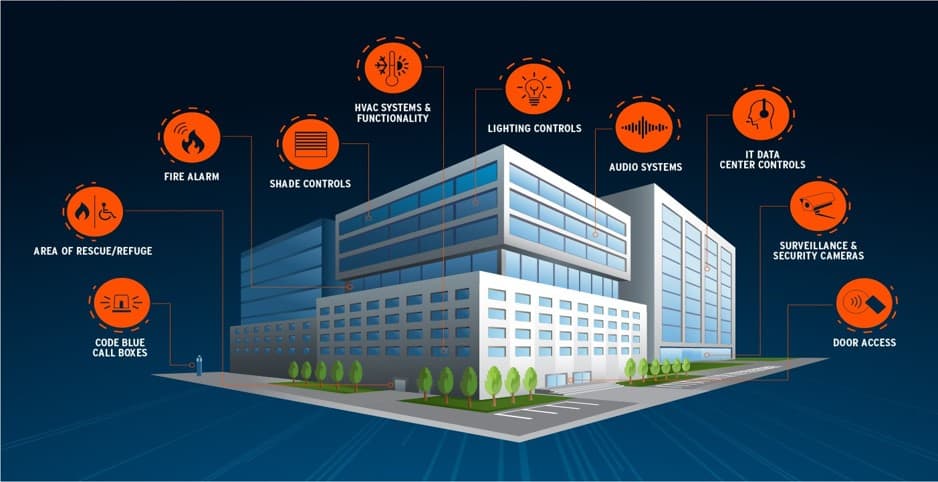
The scope of a BMS varies by building, but typically covers:
A BMS works through a network of sensors, controllers, and actuators connected to a central software platform.
Controllers communicate with each other and with the supervisor using protocols such as BACnet or Modbus. Most modern systems use BACnet/IP over standard Ethernet networks. BS EN ISO 16484-5 is the European adoption of the BACnet protocol standard, which defines how BMS devices from different manufacturers communicate on an open network — making it the technical foundation of any interoperable building automation system.
Buildings without a BMS typically waste between 20% and 40% more energy than those with a properly commissioned and maintained system. The reasons are straightforward:
A BMS solves all of these problems. It is the single most cost-effective energy saving measure available for a commercial building — more impactful than upgrading individual pieces of plant.
BMS installations are found across most commercial building types:
Even smaller commercial buildings with a single AHU, boiler, and a few FCUs benefit from BMS control.
Installing a BMS in a new building or retrofitting one into an existing building involves several distinct phases:
BMS costs vary significantly by building size, complexity, and the scope of services controlled. A simple system for a small office might cost £15,000–£30,000 installed. A full BMS for a large multi-floor office with chillers, AHUs, and metering might range from £100,000 to £500,000+. For a full breakdown of what drives cost in new installations, see our guide to BMS installation cost in the UK.
For a detailed breakdown, see our guide to BMS retrofit costs in the UK — which covers the additional variables specific to upgrading an existing building.
A BMS requires ongoing maintenance to continue performing at its best. Software needs updating, calibrations drift, and control strategies need adjusting as building use changes. Most building owners put their BMS on a maintenance contract to ensure regular inspections, software backups, and priority response when faults occur.
The quality of a BMS installation is heavily dependent on the commissioning engineer's competence. A technically correct panel installation can still result in a poorly performing system if the control sequences are poorly written or never properly tuned. CIBSE Guide H — Building Control Systems — is the UK industry reference for BMS design and specification, defining the functional requirements for controllers, supervisors, and communication networks in commercial buildings. When selecting a BMS contractor, look for manufacturer accreditation (Trend, Distech, or Siemens), BSRIA BG8 compliance, and a track record of completed projects you can verify. If you're weighing up which platform to specify, see our comparison of Trend vs Distech vs Siemens BMS for a practical breakdown of the strengths of each system.
Alpha Controls installs and maintains building management systems across London and the South East. Contact us for a free consultation on your project.
Our team of building automation specialists is ready to help you optimise your building's performance and efficiency.
Get in Touch