Getting a BMS installed in a commercial building without a firm understanding of what drives cost is a reliable way to end up with either a budget shortfall mid-project or a quote comparison that's impossible to evaluate fairly. Two contractors might price the same building at £40,000 and £95,000 — not because one is profiteering, but because they've scoped it completely differently. One has included full programming, commissioning, and a front-end supervisor. The other has priced hardware and first-fix cabling only.
This guide gives real-world cost ranges for BMS installations in UK commercial buildings, explains the main cost drivers, and makes clear what is — and is not — typically included in a BMS contract. If you're working with an existing building rather than a new build, see our companion guide to BMS retrofit costs in the UK, which covers the additional variables that affect upgrade projects. And if you're new to building management systems, our plain English guide to what a BMS is covers the fundamentals before you get into cost planning.
The following ranges reflect typical Alpha Controls project costs for complete BMS installations in commercial buildings. All figures are supply and install, excluding VAT.
£15,000 – £35,000
A single-tenanted office floor with fan coil units, a small AHU, and simple heating. One IQ4 outstation, zone temperature control, time scheduling, and a basic supervisor on a local PC or cloud instance. This scope suits a small commercial fit-out or a tenanted floor in a larger building where the landlord wants independent controls.
£35,000 – £120,000
Multi-floor office building with multiple AHUs, chiller or boiler plant, FCU zone control, metering, and a networked supervisor. Two to eight outstations, BACnet/IP network, full alarm management, and energy dashboards. This is the most common scope for London commercial offices and out-of-town business parks.
£120,000 – £400,000
Multi-floor development with centralised chillers, cooling towers, boilers, AHUs, hundreds of FCUs or VAV boxes, metering throughout, and a full supervisor with multi-user access. Often includes integration with third-party systems — lifts, access control, fire, power monitoring. Projects at this scale typically run over several months and are delivered in phases.
£400,000 – £1,000,000+
Major commercial, healthcare, education, or data centre projects. Multiple buildings, hundreds of controllers, complex integration requirements, and significant programming scope. These projects are tendered competitively and priced on detailed specification.
Understanding cost drivers helps you identify where value is being added — and where scope can be adjusted if budget is a constraint.
The fundamental unit of BMS cost is the number of control points — inputs (sensors, status signals) and outputs (valves, dampers, drives) connected to the system. A typical fan coil unit requires 4–8 points. An air handling unit requires 15–40 points depending on complexity. The total I/O count determines how many controllers are needed, which is the largest single cost driver in most installations.
IQ4 and IQ4NC controllers from Trend, ECB and ECLYPSE controllers from Distech, and equivalent hardware from Siemens and Honeywell all have list prices of £800–£3,000+ per unit. A medium-sized building might need 6–20 controllers. The hardware cost is significant but generally transparent in a well-itemised quote.
Sensors (temperature, humidity, CO₂, pressure, flow), actuators (valve actuators, damper actuators, variable speed drives), and metering equipment (heat meters, electrical sub-meters) add substantially to project cost. A complex AHU with full instrumentation can require £5,000–£15,000 in field devices alone. Projects that reuse existing sensors and actuators cost less; greenfield installations cost more.
First-fix electrical work — laying cables, installing containment, pulling wires to field devices — is labour-intensive. In an occupied refurbishment it often involves working around tenants, running cables through ceiling voids, and coordinating with other trades. Cabling can account for 20–35% of total project cost on complex refurbishments.
BMS programming — writing the control sequences that determine how plant behaves — is skilled engineering work. A complex AHU with economiser, heat recovery, frost protection, and demand-controlled ventilation might take 2–4 days to programme and commission correctly. Programming cost is often underestimated in budget quotes from less experienced contractors. CIBSE Commissioning Code M defines commissioning as a mandatory project stage, not an optional add-on — a properly priced BMS installation contract includes commissioning to Code M standards, covering point-by-point verification, witnessed testing, and a handover log book; quotations that bundle commissioning into a single line item without breakdown should be clarified. Approved Document Part L requires that new commercial BMS installations include metering for gas, electricity, and any other significant fuel, capable of recording in half-hour intervals — this is a building regulations compliance requirement, not an optional extra, and its absence can affect building control sign-off. For detail on what good commissioning involves and why it has such a large bearing on long-term system performance, see our article on why BMS commissioning is critical for success.
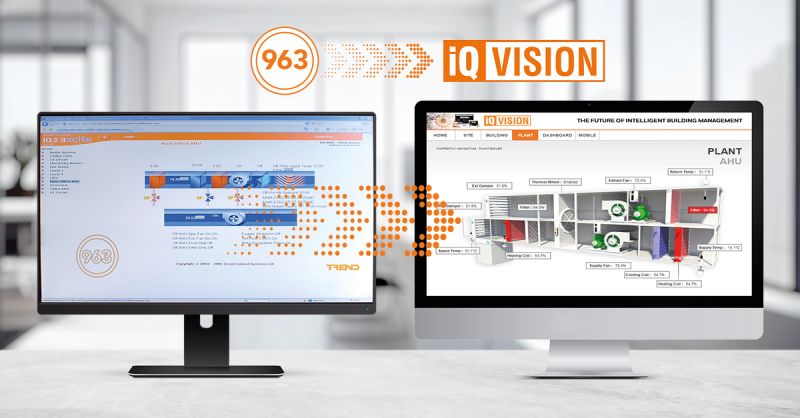
The supervisor platform (IQVISION, Niagara, Desigo CC) has both software licence costs and graphics build costs. A well-built graphics front-end with intuitive plant mimics, alarm pages, and energy dashboards takes time to build correctly. Supervisors that are rushed or poorly built create ongoing operational headaches.
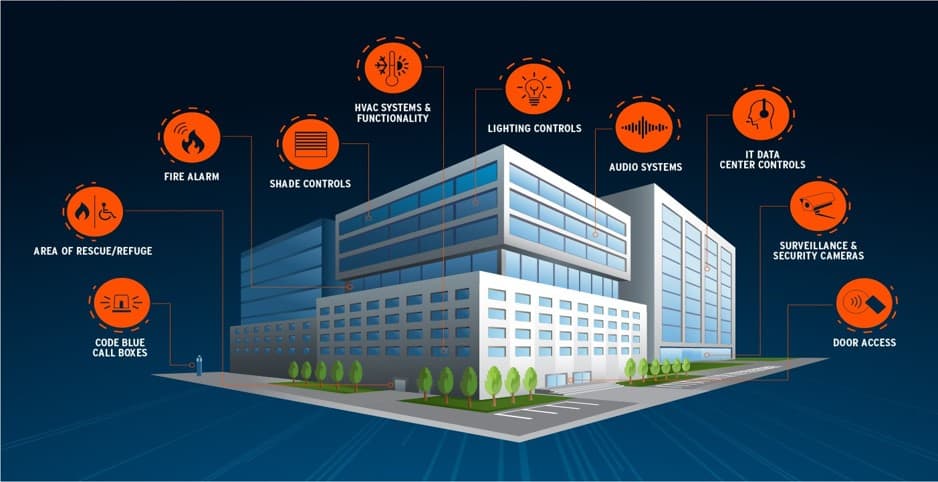
Integrating third-party systems — metering, access control, fire alarm, generator status, lifts — via BACnet, Modbus, or API adds cost but delivers significant value. Each integration point requires protocol configuration, testing, and often gateway hardware. Budget £1,000–£5,000 per third-party system integration depending on complexity.
Retrofitting a BMS into an existing occupied building consistently costs more than an equivalent new build installation for several reasons:
As a rough rule of thumb, a retrofit in an occupied building costs 25–40% more than an equivalent new build installation, with the premium increasing for older or more complex buildings.
Always check what a BMS quote includes. Items that are sometimes excluded from headline prices:
A detailed, itemised quote from a reputable contractor should make all inclusions and exclusions explicit. Be cautious of lump-sum quotes with no breakdown — they make it impossible to compare contractors fairly.
The most accurate quotes come from a pre-tender survey where the contractor walks the building, reviews existing M&E documentation, and agrees the scope in detail before pricing. This takes half a day to a day depending on building size, but it eliminates the ambiguity that leads to post-contract variations.
For budget purposes at feasibility stage, the cost-per-point method (typically £300–£600 per connected I/O point for a complete installation) gives a useful order-of-magnitude figure. A 200-point system might budget at £60,000–£120,000; a 500-point system at £150,000–£300,000. These are rough guides only — actual costs depend on all the factors above.
Alpha Controls provides fixed-price BMS installation contracts for commercial buildings across London, Kent, Surrey, Essex, and the South East. We carry out a pre-tender survey at no charge for projects over £50,000, providing a fully itemised quote that covers hardware, cabling, programming, commissioning, and documentation.
Request a quote or contact our team to discuss your project. We also offer maintenance contracts from the point of handover, so ongoing support is in place from day one.
Our team of building automation specialists is ready to help you optimise your building's performance and efficiency.
Get in Touch