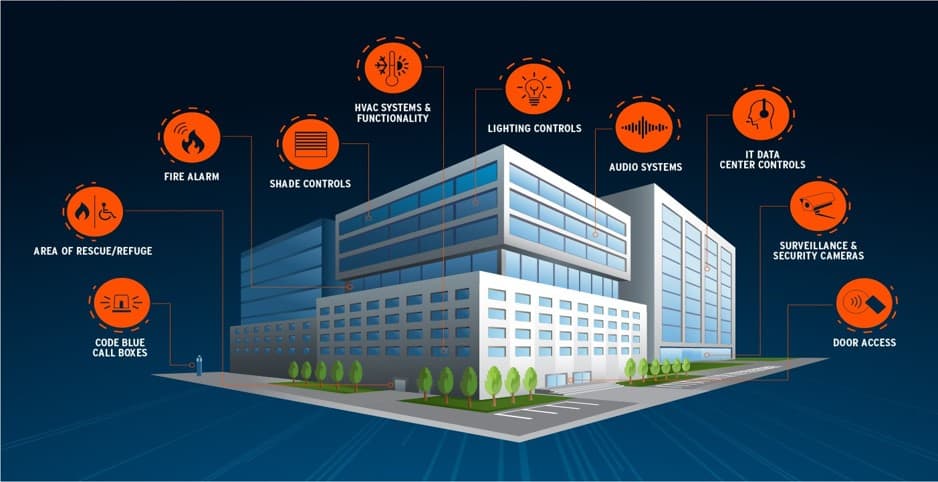
A BMS that was properly commissioned on day one doesn't stay properly commissioned forever. Buildings change. Tenants move in and out. Plant gets replaced. Seasons shift. And slowly, incrementally, the gap between what the BMS was set up to do and what the building actually needs widens until the system is technically running but practically failing. That's not a dramatic collapse — it's a quiet drift that shows up in energy bills, comfort complaints, and a maintenance team that spends more time fighting fires than managing the building.
The frustrating part is that most of these problems are fixable. A BMS recommissioning exercise — going back through the control strategies, setpoints, schedules, and sensor calibrations to realign them with how the building is actually being used — typically delivers measurable improvements in comfort, energy performance, and maintenance workload within weeks. But you have to recognise the signs first.
Here are the five most common indicators that your BMS needs recommissioning, drawn from what we see on site across commercial buildings every week.
Comfort complaints are the canary in the coal mine. When tenants or building users start reporting that certain areas are too hot, too cold, or stuffy — and those complaints persist despite the FM team's best efforts to adjust setpoints — the problem almost always sits deeper than a thermostat setting.
What typically happens is this: a zone is reported as too warm. The FM team drops the heating setpoint by a degree or two. The complaint continues. Someone overrides the controller to force the valve closed. Now the zone is too cold in the mornings. Another override goes in. Within a few months, you've got a patchwork of manual overrides scattered across the building, none of which are documented, all of which are fighting the original control strategy. The BMS is still running, but it's been progressively bypassed to the point where it's no longer controlling anything coherently.
The root cause is usually one of three things: sensor drift (the space temperature sensor is reading 2-3 degrees off, so the controller is making decisions based on wrong data), an actuator that's stuck or sluggish (the valve isn't responding to the control signal, so adjusting the setpoint achieves nothing), or a control strategy that was never updated when the building use changed (the sequence was commissioned for a fully occupied open-plan floor, but that floor is now partitioned into meeting rooms with very different load profiles).
CIBSE Guide H: Building Control Systems is clear on this point — control system performance depends on the accuracy of field devices and the relevance of control strategies to current building use. Guide H explicitly states that building control systems should be subject to periodic review and recommissioning to maintain performance, particularly after changes to building occupancy patterns, internal layouts, or plant configurations. If your building has changed and the BMS hasn't been updated to reflect those changes, the comfort complaints are a symptom of a system that's out of alignment with reality.
Recommissioning addresses all three causes systematically. Every sensor is checked against a reference instrument. Every actuator is stroked to confirm full travel. Every control sequence is reviewed against the current building use and adjusted where the original assumptions no longer hold. The result is a building where the BMS is actually controlling what it's supposed to control, rather than running sequences designed for a building that no longer exists.
Energy costs going up while nothing obvious has changed is one of the clearest signals that the BMS is underperforming. The problem is that "nothing obvious" is doing a lot of work in that sentence — the changes are there, they're just happening inside the control system where nobody's looking.
The most common energy waste culprit we find during recommissioning is time schedule drift. Schedules that were set up during commissioning — plant on at 06:00, off at 19:00, weekends off — get adjusted over time. Someone extends the schedule for a late event and doesn't change it back. The clock change moves everything forward or backward and nobody rechecks. A new tenant on Floor 3 needs Saturday operation, so someone enables weekend schedules across the whole building rather than just that floor. Within a year, the building is running plant 20-30 hours per week more than the design intent, and every additional hour of unnecessary operation is money out the window.
Approved Document L of the Building Regulations requires that building services controls — including time scheduling, optimum start/stop, and weather compensation — are maintained to continue delivering the energy efficiency standards they were designed to achieve. A BMS where the schedules have drifted, the optimum start algorithm hasn't been retuned after seasonal changes, or the weather compensation curve hasn't been adjusted for actual building performance is not meeting Part L requirements. That's not just an energy cost problem — it's a compliance issue.
The second major energy waste source is simultaneous heating and cooling. This happens more often than anyone wants to admit. A zone where the heating valve and the cooling valve are both partially open at the same time — fighting each other — is burning energy at a remarkable rate while delivering mediocre comfort. In a properly commissioned system, the dead band between heating and cooling setpoints prevents this. In a system that's drifted, those dead bands have often been narrowed or eliminated by well-meaning adjustments, creating exactly the conditions for simultaneous operation.
CIBSE TM54: Evaluating Operational Energy Performance of Buildings provides the methodology for comparing a building's actual energy consumption against its designed performance. If your energy bills have increased by more than 10-15% without a corresponding change in occupancy or weather severity, a TM54-aligned analysis combined with a BMS recommissioning exercise will typically identify where the gap is — and in most buildings, the BMS is a significant part of the answer. Our post on what a BMS actually controls and why it matters covers how the controls layer connects to energy performance in more detail.
Every control decision the BMS makes is only as good as the data feeding it. A space temperature sensor that reads 22°C when the actual temperature is 24°C will cause the controller to call for heating when the space is already above setpoint. A duct CO2 sensor that's drifted high will drive the AHU to deliver maximum fresh air into a half-empty building, wasting heating or cooling energy on unnecessary ventilation. A flow temperature sensor on a heating circuit that reads 5°C low will cause the boiler to fire harder and longer than needed, driving up gas consumption and accelerating component wear.
Sensor drift is inevitable. All sensors drift over time — thermistors, pressure transducers, CO2 sensors, humidity sensors. The question is whether anyone is checking. In a building with an active maintenance regime that includes sensor calibration verification as part of the PPM schedule (as required by SFG20 maintenance specifications for building control systems), drift is caught early and corrected before it causes problems. In a building where the maintenance contract covers controllers and software but nobody is systematically verifying sensor accuracy, the drift accumulates silently until the symptoms become impossible to ignore.
The diagnostic signs of sensor drift are often visible in the BMS trend data — if anyone is looking at it. A space temperature sensor that consistently reads 2°C different from the sensor in the adjacent zone, despite similar load conditions, is almost certainly drifted. A duct sensor that shows a smooth, unchanging reading while the plant is cycling is probably stuck or disconnected. An outside air temperature sensor that reads significantly different from a portable reference thermometer held next to it is giving the BMS bad data for every weather-compensated control loop in the building.
Recommissioning includes a systematic sensor audit — every sensor that feeds a control decision is checked against a calibrated reference instrument, and any sensor reading outside acceptable tolerance is recalibrated or replaced. This isn't glamorous work, but the impact on control quality and energy performance is often dramatic. We've seen buildings achieve 8-12% energy savings from sensor recalibration alone, simply because the system started making decisions based on accurate data rather than accumulated error.
This is related to the energy issue above, but it deserves its own section because the operational impact goes beyond energy. When a BMS loses control of its time schedules — either because schedules have been overridden, because the override register has accumulated to the point where nobody knows what's active, or because the schedule logic itself has been corrupted by years of ad-hoc adjustments — the building stops behaving predictably.
The classic pattern is this: an override is applied to keep plant running for an event. The event finishes. Nobody removes the override. The plant continues to run 24/7 until someone notices — which might be weeks later, or might be never. Multiply this across dozens of controllers and hundreds of override-capable points, and you end up with a building that's technically scheduled but practically uncontrolled.
CIBSE Commissioning Code M: Commissioning Management sets out that time schedules and override management are core elements of the commissioning process, and that these settings should be documented, tested, and verified as part of both initial commissioning and any subsequent recommissioning exercise. Code M is explicit that overrides should be temporary by design, with automatic timeout periods that return the system to normal scheduled operation. If your BMS allows permanent overrides with no expiry — and most do, by default — the accumulation of forgotten overrides is a predictable failure mode that recommissioning needs to address.
During a recommissioning exercise, every override on every controller is audited. Permanent overrides are challenged — is this override still needed? Does anyone know why it was applied? If neither question has a clear answer, the override is removed and the system reverts to its scheduled behaviour. Time schedules are rebuilt from scratch against the current occupancy profile, with fresh optimum start parameters calculated for each zone based on actual building thermal performance rather than the values assumed during original commissioning.
The operational improvement from cleaning up overrides and rebuilding schedules is often immediate and noticeable. FM teams report fewer out-of-hours callouts, fewer comfort complaints in the first hour of occupation, and a general sense that the building is behaving as expected rather than doing something different every day. That predictability is what a properly commissioned BMS should deliver — and recommissioning restores it.
If your BMS is generating hundreds of alarms per week and nobody is responding to most of them, the alarm system has failed. Not because the alarms aren't real — many of them are — but because the volume has overwhelmed the people who are supposed to act on them. This is alarm fatigue, and it's one of the most dangerous states a BMS can be in, because genuine critical alarms get lost in the noise and go unnoticed until they cause a real problem.
The root cause is almost always an alarm strategy that was either never properly configured during commissioning or has degraded over time. Common problems include alarm thresholds that are too tight (a return air temperature alarm set at +/- 0.5°C of setpoint will trigger constantly during normal operation), alarms configured on points that aren't critical (nobody needs a high-priority alarm when a meeting room gets half a degree above setpoint), and alarms that are still active on plant that's been decommissioned, replaced, or is seasonally offline.
CIBSE Guide H includes specific guidance on alarm management strategy for building control systems. Guide H states that alarms should be classified by severity, prioritised based on operational impact, and configured with appropriate deadbands and time delays to prevent nuisance triggering. The standard recommends that the total volume of alarms in a properly configured system should be manageable by the operational team — typically no more than 5-10 alarms per operator per day that require human attention. If your building is generating 50+ alarms per day, the alarm strategy needs a complete overhaul as part of any recommissioning exercise.
A good recommissioning includes a full alarm rationalisation: every alarm point is reviewed, reclassified by severity, and reconfigured with appropriate thresholds and deadbands. Non-critical alarms are downgraded to logged events. Alarms on decommissioned plant are removed. What's left is an alarm system that tells the FM team what they actually need to know, when they need to know it — without the background noise that causes important alerts to be ignored.
This connects directly to the value of remote monitoring. A building with a clean alarm strategy and a remote monitoring service can catch and resolve issues before they become complaints. If your current BMS maintenance contract doesn't include alarm management as part of the scope, that's worth addressing at the next contract review.
A full BMS recommissioning exercise isn't a quick visit — it's a structured programme that typically takes one to four weeks depending on the size of the building. The scope includes a complete sensor audit and recalibration, actuator stroke testing, control strategy review against current building use, time schedule rebuild, override audit and cleanup, alarm strategy rationalisation, trend log configuration, and supervisor graphics update where the building layout or plant has changed.
The exercise should be carried out against the original design intent where documentation exists, or against a refreshed sequence of operations where the building use has changed significantly. BSRIA BG 11/2010 (Soft Landings) emphasises that recommissioning is most effective when carried out with reference to documented design intent and performance criteria — which is one of the strongest arguments for maintaining proper system documentation from day one.
For buildings running Trend IQ4 controllers, the recommissioning work happens within the Trend programming environment and 963 Supervisor platform. For Distech ECLYPSE systems, it's carried out within the Niagara Framework environment. Both platforms support the full range of recommissioning activities, but the engineering approach and toolset differ. Having a contractor who is competent on the specific platform installed — not just "BMS literate" in general terms — makes a significant difference to the quality of the outcome. Our comparison of Trend and Distech platforms covers the practical differences between the two ecosystems if you're working with either.
The best approach to BMS recommissioning isn't to wait until the symptoms become unbearable. A well-managed building should include seasonal recommissioning — typically in spring and autumn — as part of its maintenance programme, with a more comprehensive full recommissioning every three to five years or after any significant change to the building's use or plant.
If you're seeing any of the five signs above — persistent comfort complaints, unexplained energy increases, suspected sensor inaccuracy, schedule chaos, or alarm overload — the case for recommissioning is already strong. The longer you leave it, the further the system drifts from its intended performance, and the more work the recommissioning exercise requires when it eventually happens.
If you want to understand what a recommissioning programme would look like for your building, get in touch with the team or request a quote. We'll carry out an initial assessment to identify the priority areas and put together a scope that delivers measurable improvement. For context on what a properly functioning BMS should look like from a cost perspective, our guide to BMS retrofit and installation costs covers the investment side of the equation.
Seasonal commissioning checks — reviewing time schedules, optimum start parameters, and heating/cooling changeover settings — should happen twice a year, in spring and autumn. A more comprehensive recommissioning exercise covering sensor calibration, actuator testing, control strategy review, and alarm rationalisation should be carried out every three to five years, or sooner if the building has undergone significant changes in occupancy, layout, or plant. CIBSE Commissioning Code M recommends that recommissioning frequency should be risk-based, with higher-criticality buildings (hospitals, data centres, laboratories) requiring more frequent attention.
Commissioning happens once, at project completion — it's the process of verifying that the installed BMS operates according to the design intent before handover to the building operator. Recommissioning is the process of going back through an existing, operational BMS to realign its performance with current building requirements. Recommissioning addresses the drift that inevitably occurs over time as buildings change, plant ages, sensors lose accuracy, and ad-hoc adjustments accumulate. Think of it as a comprehensive service and recalibration for the entire control system, not just individual components.
The cost depends on the size of the system, the number of controllers, the extent of the drift, and the quality of existing documentation. As a rough guide, a recommissioning exercise for a mid-size office building (40-60 controllers) typically runs to £5,000-£15,000 depending on scope. The return is usually rapid — buildings that have drifted significantly often see energy savings of 10-20% in the first year after recommissioning, which for a building spending £100,000+ per year on energy can represent payback within months. That's before accounting for reduced comfort complaints, fewer reactive callouts, and improved maintenance efficiency.
Some elements of BMS recommissioning can be handled by a competent in-house FM team — time schedule reviews, override audits, and basic alarm management, for example. However, sensor calibration requires reference instruments and expertise, actuator testing requires knowledge of the specific hardware, and control strategy review requires an engineer who understands both the BMS platform and the mechanical systems it's controlling. For anything beyond basic housekeeping, a specialist BMS contractor with platform-specific expertise — whether that's Trend, Distech, Siemens, or Schneider — will deliver a more thorough and effective outcome.
Our team of building automation specialists is ready to help you optimise your building's performance and efficiency.
Get in Touch